
You flip on the kitchen light late at night and see big black ants marching along the baseboard. Then you find a small pile of what looks like sawdust under a window, and the worry sets in: are they eating your house? Carpenter ants rarely cause the kind of damage termites do, but they are a sign of moisture problems you’ll want to fix.
The good news is that once you find where they’re nesting, the fix is straightforward. This guide shows how to get rid of carpenter ants step by step, starting with finding the nest, then treating it with bait, dust or spray and keeping the colony from coming back.
How to Get Rid of Carpenter Ants in 5 Steps
Spraying the ants you see won’t solve the problem, because the workers you see are only a small part of the colony. The most reliable plan for how to get rid of carpenter ants is to find the nest, treat it directly and then remove the moisture that drew them in. Use this table to compare your treatment options.
| How to get rid of carpenter ants | Best for | How it works | Drawback |
|---|---|---|---|
| Bait | Nests you can’t reach | Workers carry it back to the colony | Slow; ants may ignore some baits |
| Insecticide dust | Wall voids and hollow wood | Ants walk through it in the nest | Need to find or drill into the nest |
| Non-repellent perimeter spray | Ants coming in from outside | Foragers carry it back without avoiding it | Doesn’t reach nests deep inside walls |
| Direct nest treatment outdoors | Stumps, woodpiles, landscape timbers | Kills the parent colony at the source | Nest must be found first |
| Fixing moisture and wet wood | Stopping new nests | Removes the damp wood they prefer | Takes repairs, not just chemicals |
| Professional treatment | Hidden or repeat infestations | Drilling, dusting and perimeter work | Costs more than DIY |
Step 1: Find the Nest
Carpenter ants are most active at night. Penn State Extension suggests checking basements, attics, garages and the outside of the house with a flashlight between 10 p.m. and 2 a.m. from May through July. Cover the lens with red film, which University of Minnesota Extension suggests because it disturbs the ants less, and follow the workers back to where they disappear behind a baseboard, cabinet or window frame.
To make the trail easier to follow, Rutgers Cooperative Extension suggests setting out diluted honey, sugar water or crushed insects after sunset. Check the bait an hour or two later and follow the ants home. You’ll find more nest-finding tips in the section on how to find a carpenter ant nest below.
Step 2: Bait the Trails
Bait works because worker ants carry it back and share it with the colony. Place it along the trails you found and near suspected nests, not in random spots. Rutgers notes that carpenter ants can be picky, so offer more than one type, such as a sweet bait and a protein bait, and refill liquid baits every few days. University of Minnesota Extension notes that protein baits often work better in spring.
Don’t spray near your bait stations. Spray kills the foragers before they can carry bait home and can make ants avoid the bait altogether.
Step 3: Dust the Nest
If you can find the nest inside a wall, door frame or hollow board, a dust is the most direct way to kill carpenter ants where they live. Penn State Extension lists low-toxicity dusts such as boric acid, diatomaceous earth and silica aerogel for blowing into nests and voids.
University of Kentucky Entomology describes drilling small 1/8 inch holes into the void and puffing the dust in, treating 3 to 6 feet on either side of where the ants enter. University of Minnesota Extension advises leaving drilling to professionals, so call one if you’re unsure. Never put liquid insecticide into wall voids, never push metal tools near outlets and always follow the label.
Step 4: Spray Smart, Not Everywhere
Here’s how to spray for carpenter ants without wasting product. Skip sprays aimed at the ants you see on the counter, which kill a handful of workers and leave the colony alone. Instead, use a non-repellent insecticide labeled for carpenter ants around the outside foundation, door frames and spots where pipes and wires enter.
Non-repellent products matter because ants can’t detect them, so they walk through and carry the insecticide back. Penn State notes these newer perimeter products often need only one application. Outdoors, you can treat a nest you find in a stump or woodpile directly.
Step 5: Fix the Moisture
Carpenter ants prefer wood that is wet or already decaying. Penn State reports they usually avoid sound wood with a moisture content below 15%. Repair leaky roofs, gutters, plumbing and window flashing, and replace rotted wood, or new colonies will keep moving in.
Parent Nests vs Satellite Nests
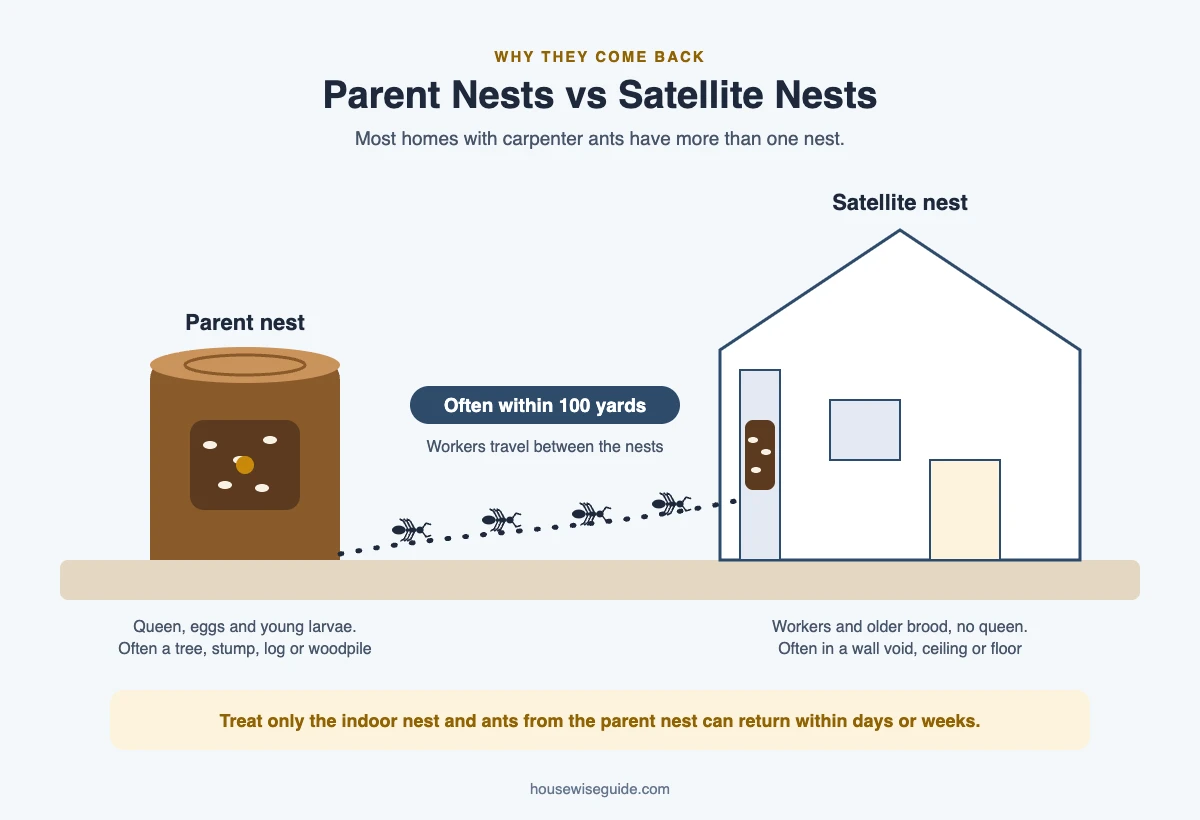
Most homes with carpenter ants have more than one nest. The parent nest holds the queen, eggs and young larvae, and it’s often outdoors in a tree, stump, log or woodpile. Satellite nests hold workers and older brood but no queen, and they’re often inside the house in a wall void, ceiling or floor.
Penn State Extension notes the parent colony is often within 100 yards of the house, and workers travel between the nests. If you only treat the satellite nest indoors, ants from the parent nest can return within days or weeks. That’s why checking outdoors is a key part of how to get rid of carpenter ants for good.
How to Find a Carpenter Ant Nest
Finding the nest is the hardest part, because it is often hidden inside a wall, door frame or hollow trim. A few tricks help:
- Look for frass. Small piles of coarse, sawdust-like debris mixed with dead ants and insect parts mean a nest is close by.
- Listen. University of Kentucky Entomology suggests tapping baseboards and wood surfaces. A hollow sound points to damage, and a faint rustling can mean an active nest. Penn State adds that an inverted water glass against the wall can help you hear it.
- Probe the wood. Push a screwdriver into suspect wood near leaks, window frames and porch posts. Soft, hollow spots often hide galleries.
- Watch for swarmers. Winged ants swarming indoors in spring usually mean the nest is inside the structure.
- Check outdoors at night. Shine a flashlight along the foundation, around doors and where utilities enter.
Signs of Carpenter Ants in the House
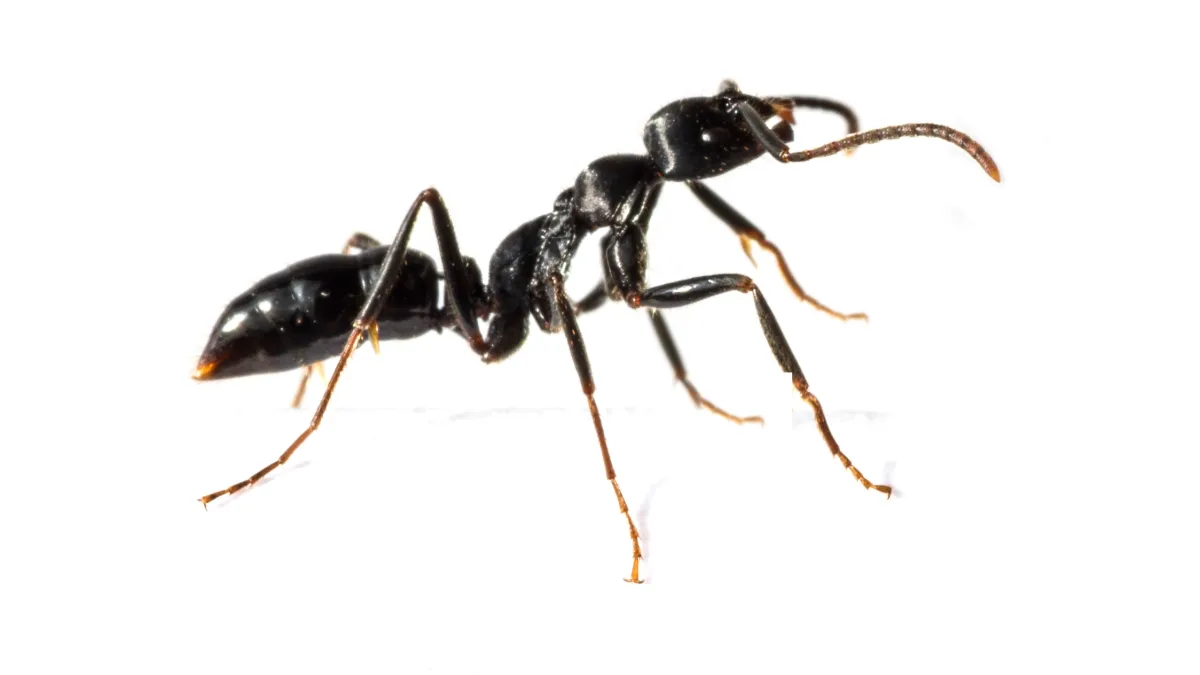
The most common first sign is big black ants inside, about 1/4 to 1/2 inch long, which some people call wood ants. Other signs include:
- Frass piles below small slits in wood, trim or ceiling boards
- Faint rustling inside walls at night
- Winged ants near windows indoors, especially in spring
- Smooth, clean tunnels inside damaged wood
Carpenter ants are usually the large ants people notice indoors. A few big ants inside in summer may simply be foraging in from outside, while ants indoors in winter usually mean a nest inside the house, according to Ask Extension experts.
Carpenter Ants vs Termites
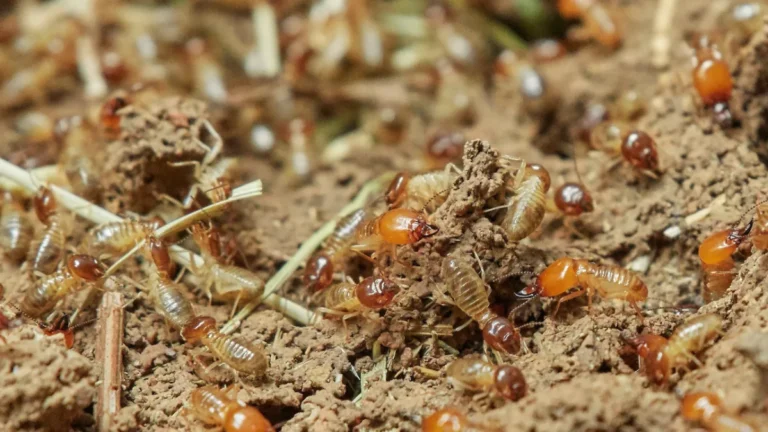
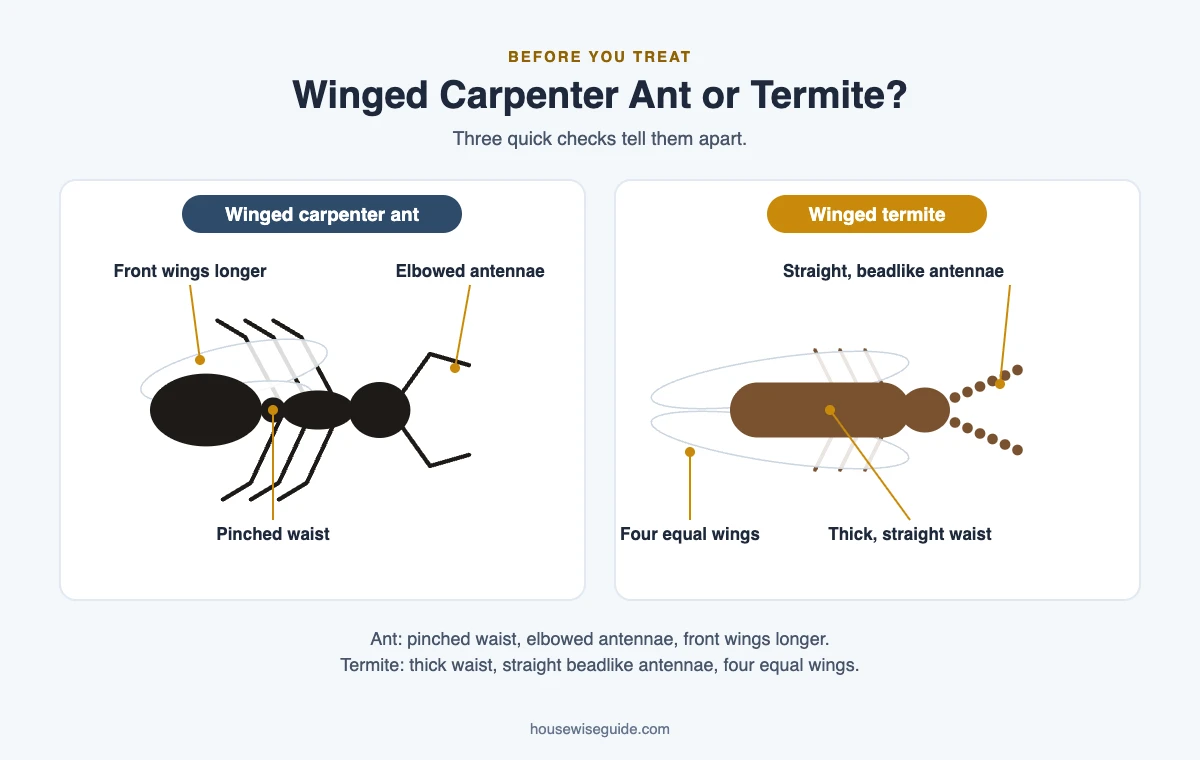
Both nest in wood, but they behave differently. Carpenter ants chew out wood to make room for their nests but don’t eat it, while termites eat wood. Carpenter ant tunnels are smooth and clean, while termite tunnels are packed with mud or soil.
| Feature | Carpenter ant | Termite |
|---|---|---|
| Waist | Pinched | Thick, straight |
| Antennae | Elbowed | Straight, beadlike |
| Wings | Front wings longer | All four about equal |
| Wood | Chewed out, not eaten | Eaten |
| Tunnels | Smooth and clean | Packed with mud or soil |
If you’re not sure which one you have, see our full guide to flying ants vs termites. The treatment for termites is very different, so it’s worth confirming first.
How to Get Rid of Carpenter Ants Naturally
If you want to avoid synthetic insecticides, gentler options can still help. They work best on small infestations:
- Boric acid or diatomaceous earth: Penn State lists both as low-toxicity dusts for nest voids. Keep them away from children and pets.
- Soapy water: Oregon State University suggests wiping up foragers with soapy water and a sponge before they return to the nest.
- Remove wet and rotting wood: Replacing damaged wood takes away the nest site itself. It is the most lasting answer to how to get rid of carpenter ants without sprays.
- Move firewood: Keep it off the ground and away from the house.
Natural methods rarely reach a satellite nest deep in a wall. If ants keep coming back, combine them with baits or call a professional.
How to Get Rid of Carpenter Ants in Trees
Seeing carpenter ants in a tree usually means the tree already has decay inside. Purdue University Forestry and Natural Resources explains that the ants don’t attack living wood; they move into wood that’s already rotting. Have an arborist check whether the decay has made the tree unsafe.
Treating the tree won’t help its health, and UMass Extension recommends no chemicals for ants in live trees. Purdue notes that treating a nest cavity with a labeled dust can reduce ants moving into a nearby house, and it advises against sealing tree cavities. Trim branches that touch your roof or siding, since ants use them as bridges.
When to Call a Professional
Call a pest control company if you can’t find the nest, if ants keep coming back after baiting or if the nest is deep inside a wall or ceiling. Penn State notes that indoor satellite colonies are unlikely to be eliminated without professional materials. A pro can drill and dust voids and treat the perimeter.
University of Kentucky Entomology advises against paying for repeated monthly spraying that only targets visible ants. Ask companies how they’ll find and treat the nests, compare guarantees and expect more than one visit. For ant problems that aren’t carpenter ants, our guide on how to kill ants covers common household species.
How to Prevent Carpenter Ants
Once the colony is gone, the aim is to make your house less inviting to the next one. These steps keep new colonies out:
- Fix leaks in roofs, gutters, plumbing and window flashing.
- Replace water-damaged or rotting wood.
- Trim tree limbs and shrubs so they don’t touch the house.
- Store firewood off the ground and away from the foundation, and never in the garage.
- Remove stumps, logs and wood debris near the house.
- Keep mulch and soil from touching wood siding.
- Seal cracks and gaps where pipes and wires enter.
If you also see large bees drilling round holes in your eaves or deck, those are carpenter bees, a different pest with a different fix. See how to get rid of carpenter bees.
Carpenter Ant FAQ
These are the questions people ask most about how to get rid of carpenter ants. Each answer is short so you can get started.
Why do I suddenly have carpenter ants in my house?
Sudden carpenter ants usually follow a moisture problem, such as a roof or plumbing leak, or a nest moving in from a nearby tree or woodpile. Spring is also when winged ants swarm and workers start foraging. Check for wet wood and outdoor nests first.
What time of year are carpenter ants most active?
Rutgers Cooperative Extension reports they are active from May to October, with peak activity in July. They forage mostly at night. Winged swarmers usually appear in spring.
Do carpenter ants eat wood?
No. They chew out wood to build their nests and push the shavings out as frass. Termites are the ones that eat wood.
Can carpenter ants damage my house?
They can weaken wood over time, but structural damage is rare, according to Penn State and Rutgers. The bigger concern is the moisture problem that attracted them. Fix the leak and treat the nest before the damage spreads.
Will carpenter ants go away on their own?
Not usually. Colonies can live for years, and Rutgers notes that a queen can live up to 15 years. Without finding and treating the nest, the ants tend to come back each spring.
For most homes, that’s how to get rid of carpenter ants: find the nest at night, bait the trails or dust the nest directly and then fix the moisture that drew them in. Start with a flashlight check tonight and a few bait stations along the trails you find. If the ants keep coming back after a few weeks, call a pest control professional to find and treat the hidden nests.