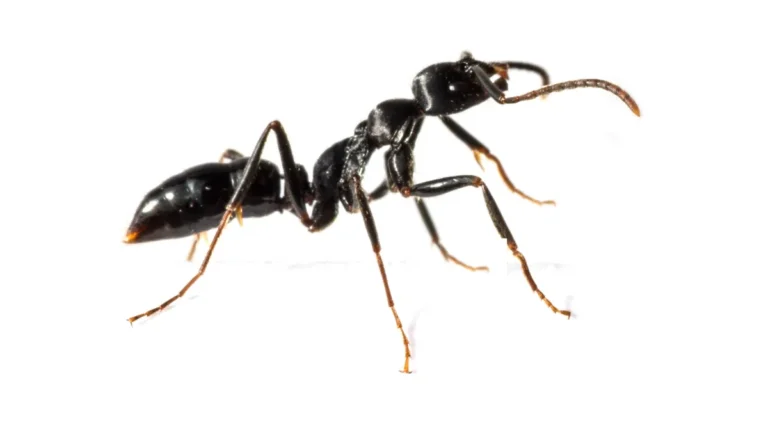

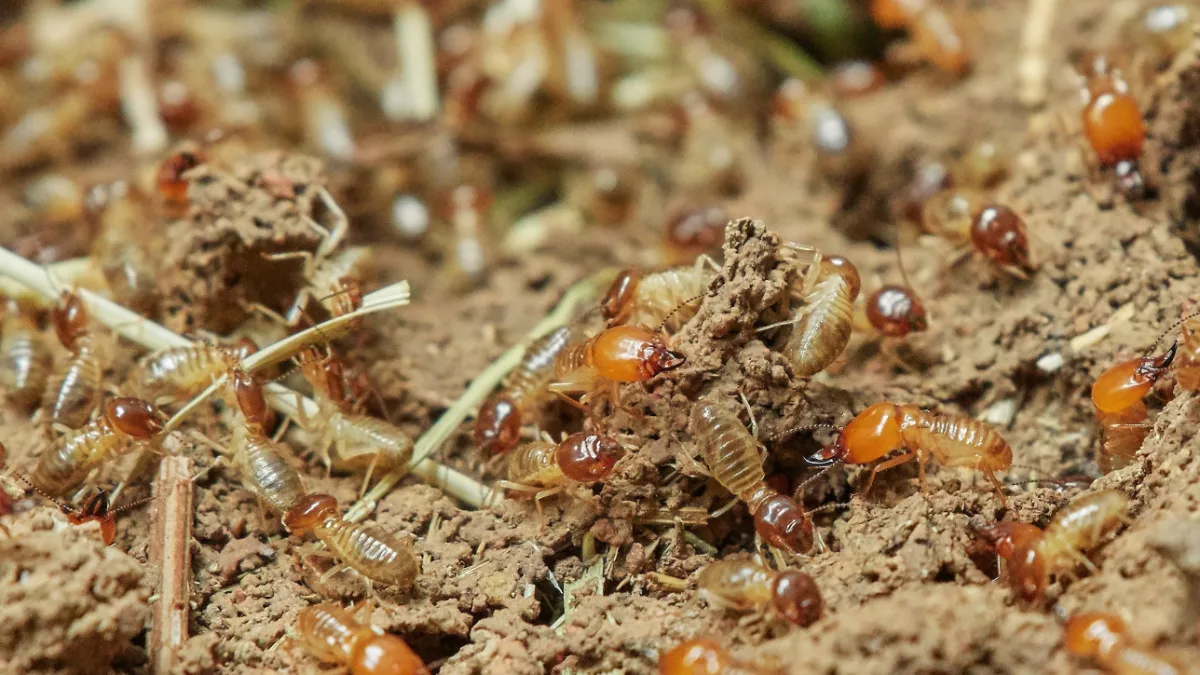
A cloud of winged insects pours out near a window, or you find a small pile of wings on the sill one morning. Your first thought is the worst one: termites. It’s a fair worry, because a termite swarm inside usually means termites are eating the house, while flying ants are mostly a nuisance.
The good news is that you can tell them apart in about a minute with three simple checks. This guide on flying ants vs termites puts the key differences side by side, then explains what to do next for each and when to call an inspector.
Flying Ants vs Termites at a Glance
The difference between flying ants and termites comes down to three body parts: the antennae, the waist and the wings. Use this table to compare winged ants vs termites side by side.
| Flying ants vs termites | Flying ant | Termite swarmer |
|---|---|---|
| Antennae | Bent or elbowed | Straight and beadlike |
| Waist | Narrow and pinched | Thick, no visible waist |
| Wings | Front pair longer than back pair | All four about equal in length |
| Wing color | Often tinted brown | Pale, clear or milky white |
| Wing length | Close to the body length | Much longer than the body |
| Body color | Black, brown or reddish | Dark brown to black (swarmers) |
| When they swarm | Spring through fall, depending on species | Mostly spring, often after a warm rain |
| What’s left behind | Some shed wings | Piles of shed wings near windows and doors |
| Damage | Most species cause none; carpenter ants hollow out wet wood | Eat wood from the inside, often unseen for years |
Both insects are the winged reproductive stage of a colony. They leave the nest to mate and start new colonies, which is why they show up in large numbers all at once.
The 3 Things to Check
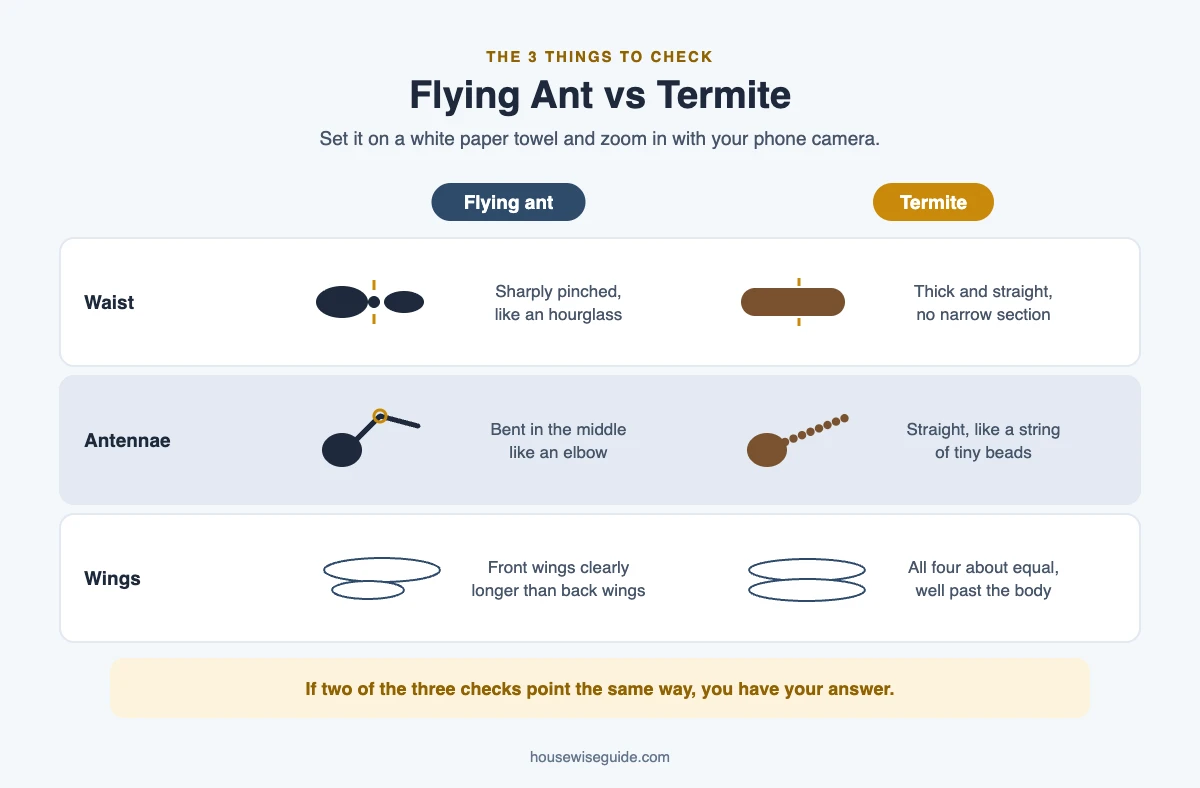
If you can catch one, set it on a white paper towel and look closely. A phone camera zoomed in works well. Here’s how to tell an ant from a termite:
- Look at the waist. Ants have a sharply pinched waist, like an hourglass. Termites have a thick, straight body with no narrow section.
- Look at the antennae. Ant antennae bend in the middle like an elbow. Termite antennae are straight and look like a string of tiny beads.
- Look at the wings. On an ant, the front wings are clearly longer than the back wings. On a termite, all four wings are about the same size and stretch well past the end of the body.
If two of the three checks point the same way, you have your answer. The flying ant vs termite pictures below show each trait side by side. The University of Kentucky uses these same three traits to separate the two.
Termite Wings vs Ant Wings
Wings are often the only thing left behind, so they’re worth a closer look. When it comes to termite wings vs ant wings, termite wings are equal in size, pale and translucent and much longer than the body. University of Maryland Extension notes that winged ant wings are tinted brown, with the front pair noticeably longer than the back pair.
Termite swarmers also shed their wings soon after they land. Mississippi State University Extension notes that a pile of light-colored wings on a windowsill may be the only sign of a termite swarm you ever see. Flying ants shed their wings too, but you’ll usually find bodies along with them.
Are Flying Ants Termites?
No. Flying ants and termites aren’t closely related, even though they look alike from a distance. So if you’re wondering whether you have ants or termites, the three checks above will settle it. Termites eat wood, while most ants eat sweets, proteins or other insects and don’t damage wood at all.
The general question of termites vs ants matters most because of what each one means for your home. Ant swarmers are usually a nuisance, but termite swarmers inside are a warning sign of an active infestation.
Ant Swarmer vs Termite Swarmer: When and Where They Appear
Timing and location give you more clues in the flying ants vs termites puzzle. Eastern subterranean termites, which are widespread across much of the US, usually swarm in spring when temperatures warm up, often after rain and during the day. North Carolina State Extension notes that in its state, swarming can start in late winter and continue until September or October.
Ant swarms happen through spring, summer and fall, depending on the species, so the season alone won’t settle it. Both are drawn to light, so you’ll often find them clustered at windows and glass doors.
Where they come from matters too. University of Kentucky Entomology notes that swarmers coming from a stump or woodpile in the yard don’t necessarily mean your house is infested. Swarmers coming from inside, or next to the foundation, porch or patio, are a stronger sign that the home itself is involved.
Carpenter Ants with Wings vs Termites
Carpenter ants are the flying ants most often confused with termites, because both live in wood. Winged carpenter ants are large and black, with the same pinched waist, elbowed antennae and unequal wings as other ants. They chew out wood to nest in but don’t eat it, so they leave behind coarse sawdust mixed with insect parts.
Termites leave very different signs: mud tubes on foundation walls and wood hollowed along the grain and packed with soil. If you find carpenter ants, see our guide on how to get rid of carpenter ants. Large black bees boring perfectly round holes in eaves and decks are carpenter bees, a different pest covered in how to get rid of carpenter bees.
Flying Termites vs Flying Ants: Signs of Damage
Looking past the insects themselves is the surest way to settle flying ants vs termites. Here are the signs to check:
| Sign | Points to termites | Points to ants |
|---|---|---|
| Mud tubes on foundation or joists | Yes | No |
| Wood hollowed along the grain with dried mud inside | Yes | No |
| Coarse sawdust mixed with insect parts | No | Yes (carpenter ants) |
| Piles of shed wings near windows | Common | Less common |
| Wood that sounds hollow or is soft when probed | Yes | Sometimes (carpenter ants) |
| Ant trails to food in the kitchen | No | Yes |
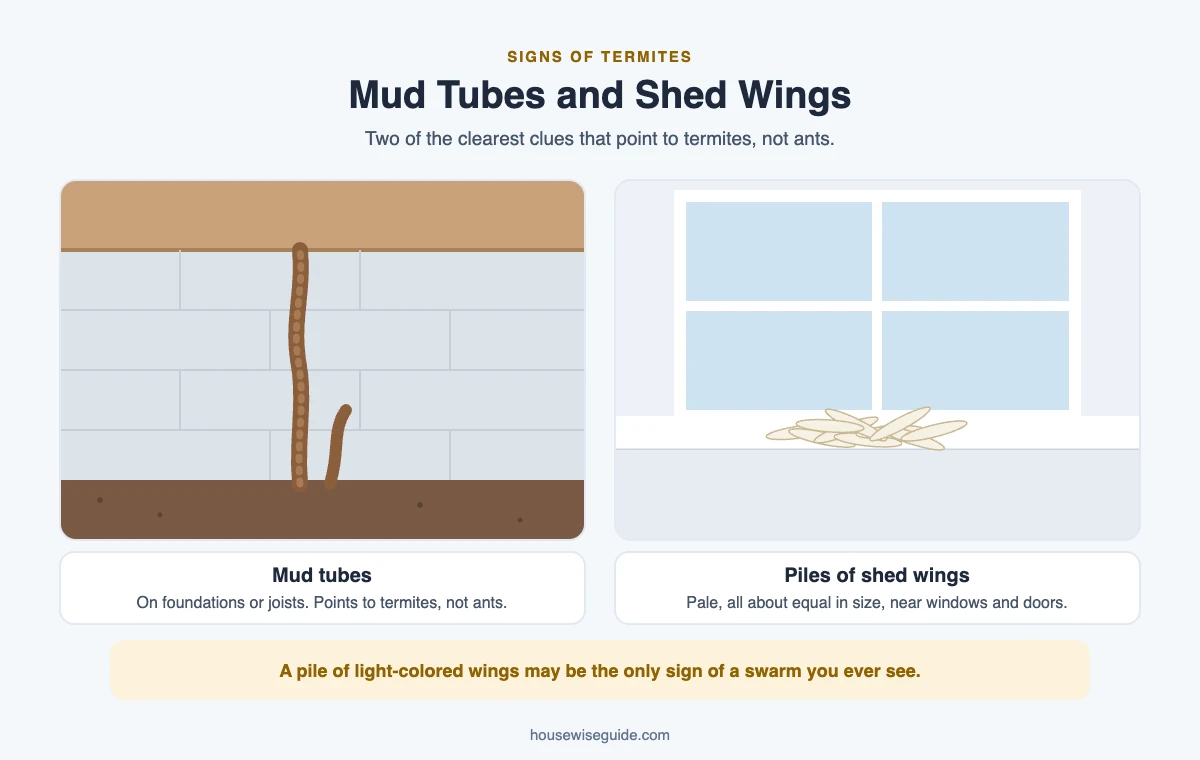
University of Kentucky Entomology notes that mud tubes are about the width of a pencil. Break one open and look for creamy-white worker termites inside. North Carolina State Extension adds that an empty tube doesn’t mean the termites are gone, since they can rebuild them.
What to Do If They’re Termites
Termite swarmers inside your home almost always mean an active infestation that needs professional treatment. Mississippi State Extension notes that hundreds of swarmers indoors suggest tens of thousands of workers feeding nearby. Still, there’s no need to panic.
- Clean up the swarmers. Sweep or vacuum them up and bag them outside. University of Kentucky Entomology notes that swarmers can’t damage wood and live only about a day.
- Save a few samples. Put several in a sealed plastic bag or a small jar to show an inspector.
- Don’t spray. NC State Extension notes that spraying swarmers or damaged wood won’t stop the infestation.
- Look for mud tubes and moisture. Check the foundation, crawl space and around plumbing, and fix any leaks.
- Get several professional inspections. Termites damage wood slowly, so take a few days or weeks to compare licensed companies, their treatment plans and their warranties.
University of Kentucky Entomology warns against firms that push you into an immediate contract with scare tactics or limited-time deals. Ask each company to explain where it found termites and how it will treat them.
What to Do If They’re Flying Ants
A flying ant swarm indoors usually means a nest is inside the walls or under the floor nearby. Outdoors, it’s usually nothing to worry about. Vacuum up the winged ants, then find where they came from.
Most flying ants are common house ants, and baits placed along their trails work well. See our guide on how to kill ants for the full method. If the winged ants are large and black and you find sawdust nearby, treat them as carpenter ants.
When to Call an Inspector
Don’t wait to see whether the swarm comes back. Call a licensed pest control company for a termite inspection if:
- Winged insects with straight antennae and equal wings swarm inside.
- You find piles of pale, equal-length wings on windowsills.
- You see mud tubes on the foundation, piers or joists.
- Wood sounds hollow, crumbles or shows dried mud inside.
- You still can’t settle flying ants vs termites after the three checks.
University of Kentucky Entomology notes that termite damage can stay hidden behind walls and flooring for years, so a professional inspection is the safest way to confirm what’s going on. Even if the swarm turns out to be ants, an inspection settles the flying ants vs termites question for good.
Flying Ants vs Termites FAQ
These are the questions people ask most about flying ants vs termites. Each answer is short so you can decide what to do next.
Does seeing flying ants mean you have termites?
No. Flying ants and termites are different insects. Seeing flying ants means an ant colony is nearby, which may need its own treatment, but it doesn’t mean you have termites.
Why do flying ants suddenly appear?
Mature ant colonies release winged males and queens to mate and start new colonies. This usually happens on warm days, often after rain. They’re drawn to light, which is why you see them at windows.
Are flying ants bad for your house?
Most aren’t. Common flying ants are a nuisance but don’t damage the home. Carpenter ants are the exception, since they hollow out damp or rotting wood to build nests.
How do you get rid of flying ants or termites?
For flying ants, vacuum them up and use bait to kill the colony. For termites, call a licensed pest control company, because termite treatment isn’t a DIY job.
Do termite swarmers bite or damage wood?
No. Termite swarmers don’t bite people and can’t damage wood themselves. The workers hidden in the colony are the ones that eat wood.
Now you know the three checks: pinched or thick waist, bent or straight antennae and unequal or equal wings. Grab one of the insects, look closely and compare it to the table above. If it’s a termite, or if you’re not sure, schedule a professional inspection before you treat anything.